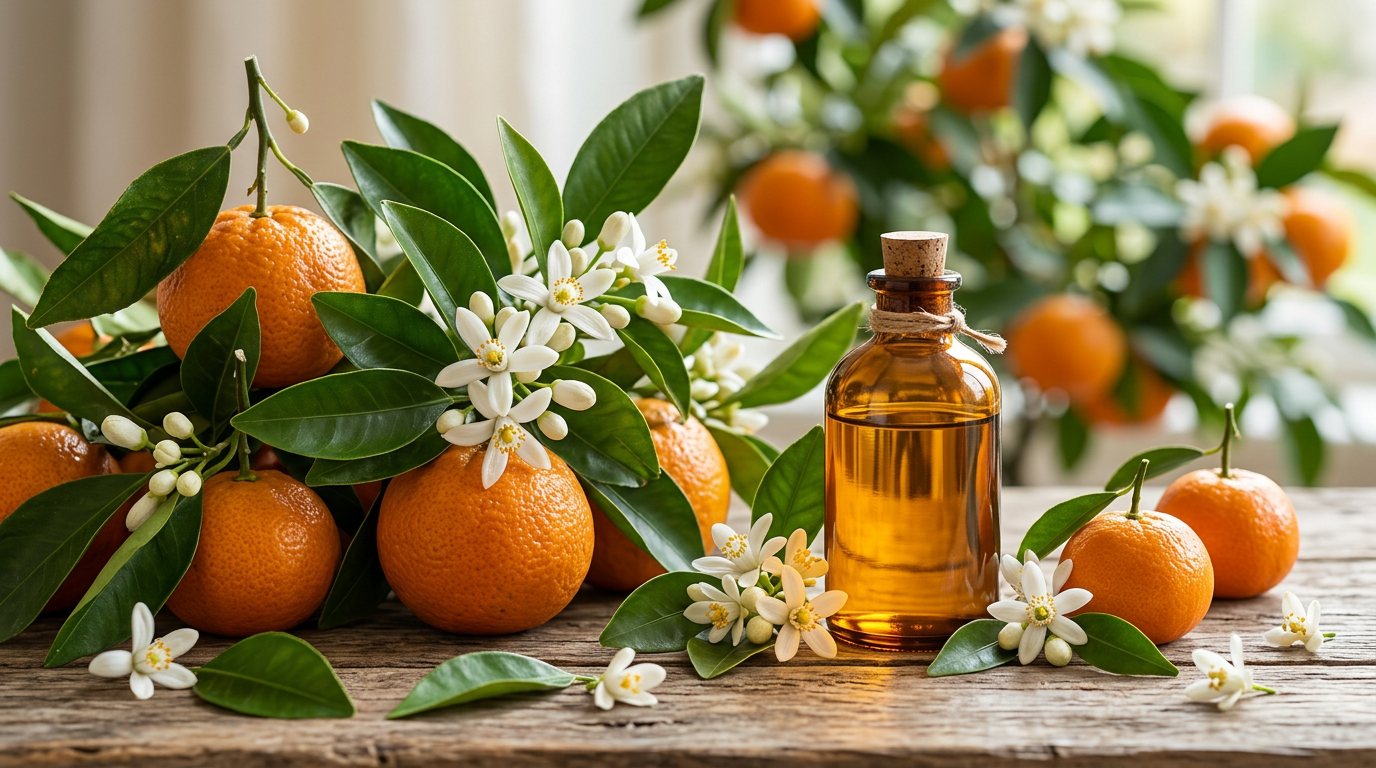
Cold-Pressed vs Steam-Distilled Mandarin Oil: Which Suits Your Craft
Walk into any formulator's supply cabinet and you'll likely find two bottles labeled "mandarin oil" that smell, behave, and price out differently. That's not a labeling error. Mandarin peel yields two distinct extracts depending on how the oil is pulled from the rind, and the method changes almost everything downstream: color, shelf stability, how the oil performs in a cold-process bar, and whether it holds up in an alcohol-based perfume base. If you've ever wondered why one supplier's mandarin smells sharp and candy-bright while another's reads soft and slightly waxy, the answer is usually sitting in the extraction method, not the fruit itself.
Mandarin Essential Oil
Our own Mandarin Essential Oil, in sizes from 0.5 oz to bulk.
From $10.99
Shop Now →This guide breaks down cold pressed vs steam distilled mandarin oil in plain terms: what each process actually does to the peel, how the resulting oils differ on paper and in the mixing bowl, and which one fits your specific project. We'll get into steam distilled mandarin oil for soap, the best mandarin extraction for perfumery, and everything in between, so you can buy with intention instead of guessing from a product description.
How Each Extraction Method Works
Mandarin oil lives almost entirely in the peel, in tiny pockets you can see if you hold a fresh rind up to the light. Getting that oil out without damaging its aromatic profile is the whole game, and cold pressing and steam distillation approach it in opposite ways.
Cold Pressing (Expression)
Cold pressing, sometimes called expression, is mechanical rather than chemical. Fresh mandarin peels are pierced or abraded, then pressed under rollers so the oil sacs rupture and release their contents. A centrifuge separates the oil from the leftover juice and pulp. No heat is applied beyond what friction naturally generates, which is why the finished oil keeps such a true, bright representation of the fresh fruit. This is the same family of process used for lemon, sweet orange, and bergamot oils, and it's the traditional route for mandarin because the peel is thin and yields generously under pressure.
Steam Distillation
Steam distillation takes a different route entirely. Peels (sometimes whole fruit remnants or a mash of rind and pulp) are loaded into a still, and pressurized steam is passed through the plant material. The heat vaporizes the volatile aromatic compounds, which travel with the steam into a condenser, cool back into liquid form, and separate from the water as oil. This method requires sustained heat and time, typically longer than the few seconds a cold press takes, and it changes the chemical makeup of the final oil in ways we'll cover below. Distillation is more common for oils where cold pressing isn't practical, but a number of mandarin producers use it specifically to create a lower-photosensitivity, more shelf-stable alternative to the expressed oil.
Cold Pressed vs Steam Distilled Mandarin Oil: Side-by-Side Comparison
| Attribute | Cold-Pressed Mandarin | Steam-Distilled Mandarin |
|---|---|---|
| Extraction method | Mechanical pressing of fresh peel | Steam vaporization of volatile compounds |
| Color | Deep golden to orange-amber | Pale yellow to nearly clear |
| Aroma profile | Bright, sweet, true-to-fruit, slightly waxy top note | Lighter, cleaner, somewhat less complex; loses some of the peel's richness |
| Furocoumarin content | Present at natural levels (relevant for leave-on skin use in sunlight) | Largely removed during distillation |
| Shelf life | Shorter; oxidizes faster once opened | Generally longer and more stable |
| Yield per pound of peel | Higher | Lower, since some volatiles are lost to processing |
| Typical cost | Moderate | Often higher, reflecting lower yield and longer processing time |
| Performance in cold-process soap | Scent can fade noticeably during saponification | Tends to hold scent somewhat better, though citrus notes fade in any cold-process bar |
| Performance in alcohol-based perfume | Excellent as a top note; blends cleanly with other expressed citrus oils | Usable, but some perfumers find it reads thinner and less "true" |
| Best suited for | Perfumery, diffuser blends, leave-off applications, room sprays | Soap, candles, rinse-off products, applications where sun exposure is a factor |
Cold-Pressed Mandarin Oil: Pros and Cons
Pros
- Delivers the fullest, most recognizable mandarin scent, closest to biting into fresh peel
- Retains natural color and a rounder aromatic complexity that many perfumers value
- Generally more affordable per ounce due to higher yield
- Widely available and well understood by formulators, with a long history of use
Cons
- Shorter shelf life; oxidation and scent drift show up faster once the bottle is opened
- Contains natural compounds that some formulators prefer to avoid in leave-on skin products used before sun exposure
- Scent can fade quickly in high-heat or high-pH environments, including cold-process soap
- Batch-to-batch color and aroma variation tends to be more noticeable, since it tracks fruit ripeness and growing conditions closely
Steam-Distilled Mandarin Oil: Pros and Cons
Pros
- Lower in the compounds associated with sun-reactive skin concerns, which broadens where formulators feel comfortable using it
- Generally more shelf-stable, useful for makers who don't move through inventory quickly
- Cleaner, lighter aroma that some soap and candle makers prefer for a less "punchy" citrus note
- Consistent batch-to-batch profile since the distillation process smooths out some raw-material variation
Cons
- Loses some of the depth and roundness that makes cold-pressed mandarin so recognizable
- Lower yield per pound of peel, which usually shows up as a higher price
- Less widely stocked; not every supplier offers a true steam-distilled mandarin, so sourcing takes more legwork
- Some perfumers find the top note reads thinner in a fine fragrance context, lacking the fullness of the expressed oil
Best For: Matching Extraction to Your Craft
Soap Makers
If you're formulating cold-process or hot-process bars, steam distilled mandarin oil for soap is generally the safer default, particularly for daytime-use bars or anything marketed for regular skin contact. The lower furocoumarin content sidesteps a common formulator concern around sun exposure, and the oil's cleaner profile still reads as recognizably citrus once it's diluted into a bar. That said, citrus top notes are famously fickle in cold-process soap regardless of extraction method: the alkaline saponification environment tends to mute bright top notes within a few weeks of cure time. Many soap makers blend mandarin with a fixative like patchouli or a heavier citrus like grapefruit to help the scent hold longer, and some anchor it further with a vanilla stabilizer.
Perfumers
For anyone asking what the best mandarin extraction for perfumery actually is, cold-pressed wins more often than not. Fine fragrance work depends on top-note complexity and that unmistakable "real fruit" quality, and cold pressing preserves both better than distillation does. Mandarin's role in a perfume is almost always as a top note, the first impression that fades within the first fifteen to thirty minutes as the composition opens into its heart notes, so the brightness and immediacy of the cold-pressed oil matters more here than shelf stability does. Perfumers working in alcohol-based formats also benefit from cold-pressed mandarin's compatibility with other expressed citrus oils like bergamot and sweet orange, since they share a similar chemical family and blend without any of the slight disconnect some noses report between an expressed oil and a distilled one in the same accord.
Candle and Wax Melt Makers
Candle work sits somewhere in the middle. Steam-distilled mandarin's cleaner profile and better stability under heat make it a reasonable choice for hot-throw performance, and its lower photosensitivity relevance is a non-issue in a burning candle anyway. Cold-pressed mandarin can work too, particularly in cold-throw-focused designs, but expect the top note to shift over the candle's shelf life as the oil ages inside the wax matrix.
Diffuser Blends and Room Sprays
For diffuser use, cold-pressed mandarin generally delivers a more satisfying, true-to-fruit aroma, and since it's not going on skin, the sun-exposure consideration doesn't apply. This is one of the more forgiving use cases for the oil, since diffusing doesn't stress the aromatic compounds the way heat-based processes like soap curing or candle burning do.
Mandarin Oil Extraction Method Compared: What the Chemistry Tells Us
The practical differences above all trace back to chemistry. Cold-pressed citrus oils carry a broader range of compounds straight from the peel, including waxes, pigments, and the furocoumarin family (compounds like bergapten) that give expressed citrus oils their sun-exposure caution. Steam distillation, because it relies on vaporization, only carries over compounds volatile enough to travel with steam. Furocoumarins are largely non-volatile, so they mostly stay behind in the still. That's a genuine trade-off, not a straightforward upgrade: you gain a lower-risk profile for leave-on skin products, but you lose some of the compounds that contribute to mandarin's characteristic roundness and depth.
Limonene, the compound responsible for most of citrus oil's bright top note, survives both processes well, which is part of why both oils still read unmistakably as "mandarin" to most noses. The differences show up more in the supporting compounds, the ones that give an oil its texture and complexity rather than its headline scent. This is worth knowing if you're formulating by nose rather than by spec sheet: a side-by-side smell test between the two extraction methods will usually reveal the distilled oil as a slightly simpler, quieter version of the pressed one.
A quick sourcing note: not every supplier discloses extraction method clearly, and "mandarin oil" without a method listed is very often cold-pressed by default, since that's the traditional and higher-yield process. If your formulation depends on the distinction (soap for daytime skin contact, for example), confirm the method with your supplier or request a certificate of analysis before you commit to a batch.
Our Verdict
Neither extraction method is objectively better; they're built for different jobs. If your work centers on perfumery, layering, or anything where mandarin needs to shine as a bright, complex top note, cold-pressed is the extraction method that best matches the brief. It's also the more budget-friendly and widely available option, which matters if you're working through mandarin in volume.
If your work centers on soap, especially bars intended for regular daytime skin contact, steam-distilled mandarin is worth the extra cost and sourcing effort. The lower furocoumarin content gives formulators more room to work with confidence, and the added shelf stability is a genuine practical advantage for small-batch makers who don't move through raw materials quickly.
Many experienced formulators end up keeping both on hand. A cold-pressed mandarin for perfumery and diffuser work, a steam-distilled mandarin for soap and skin-adjacent projects: it's not an either-or decision so much as matching the right tool to the right part of your craft. When in doubt, request a small sample of each from your supplier, do a side-by-side dilution test, and let your own nose and your specific application settle the question. And as with any concentrated citrus oil, always dilute appropriately before skin contact, patch test on a small area first, and consult a qualified healthcare provider with any questions about use on sensitive skin.