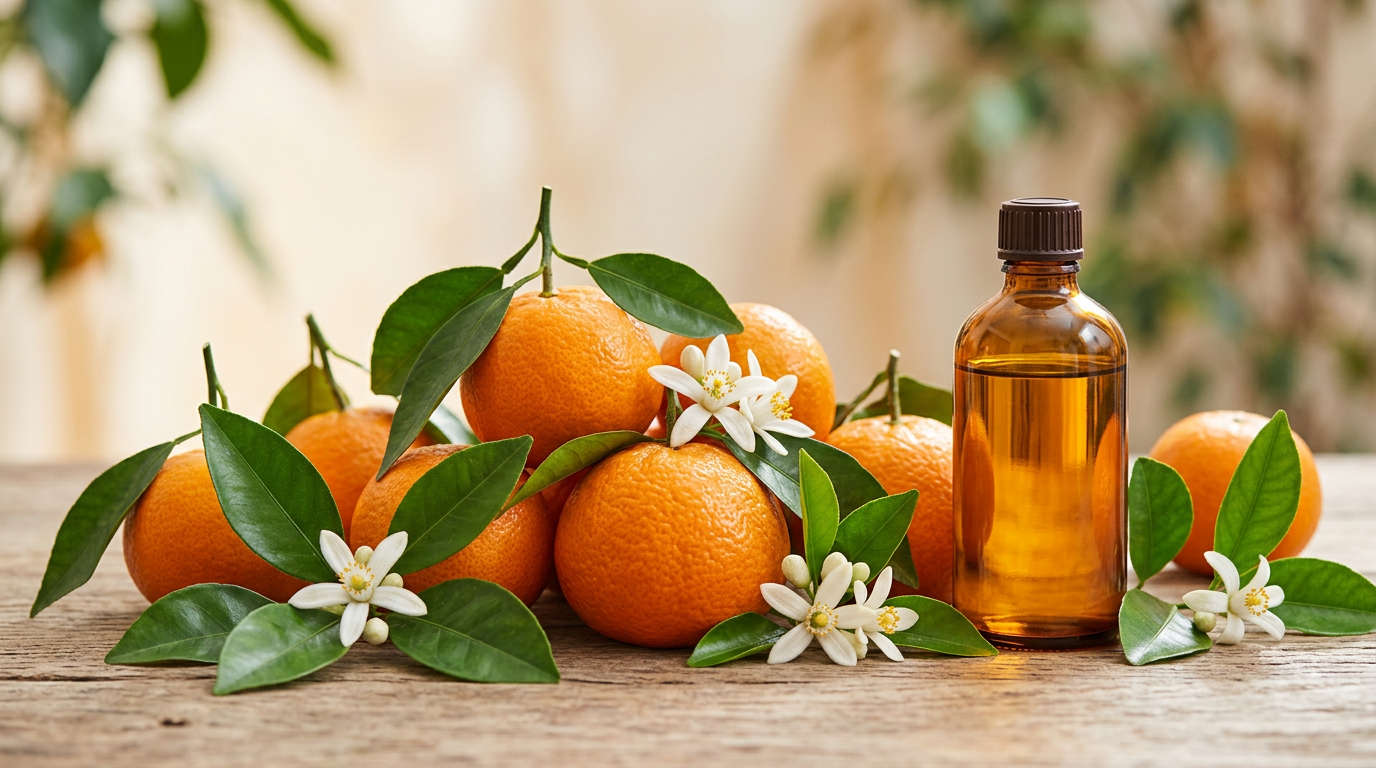
A Buyer's Guide to Mandarin Oil Origin and Grade: Italy vs China
Walk through any online marketplace and search "mandarin essential oil," and you'll find bottles ranging from four dollars to forty, all claiming to be pure Citrus reticulata. Some list an origin. Some list a grade. Many list neither, and hope you won't ask. Origin and grade are the two labels that actually tell you something concrete about what's in the bottle, and they're also the two most commonly misused or missing pieces of information on a mandarin oil label.
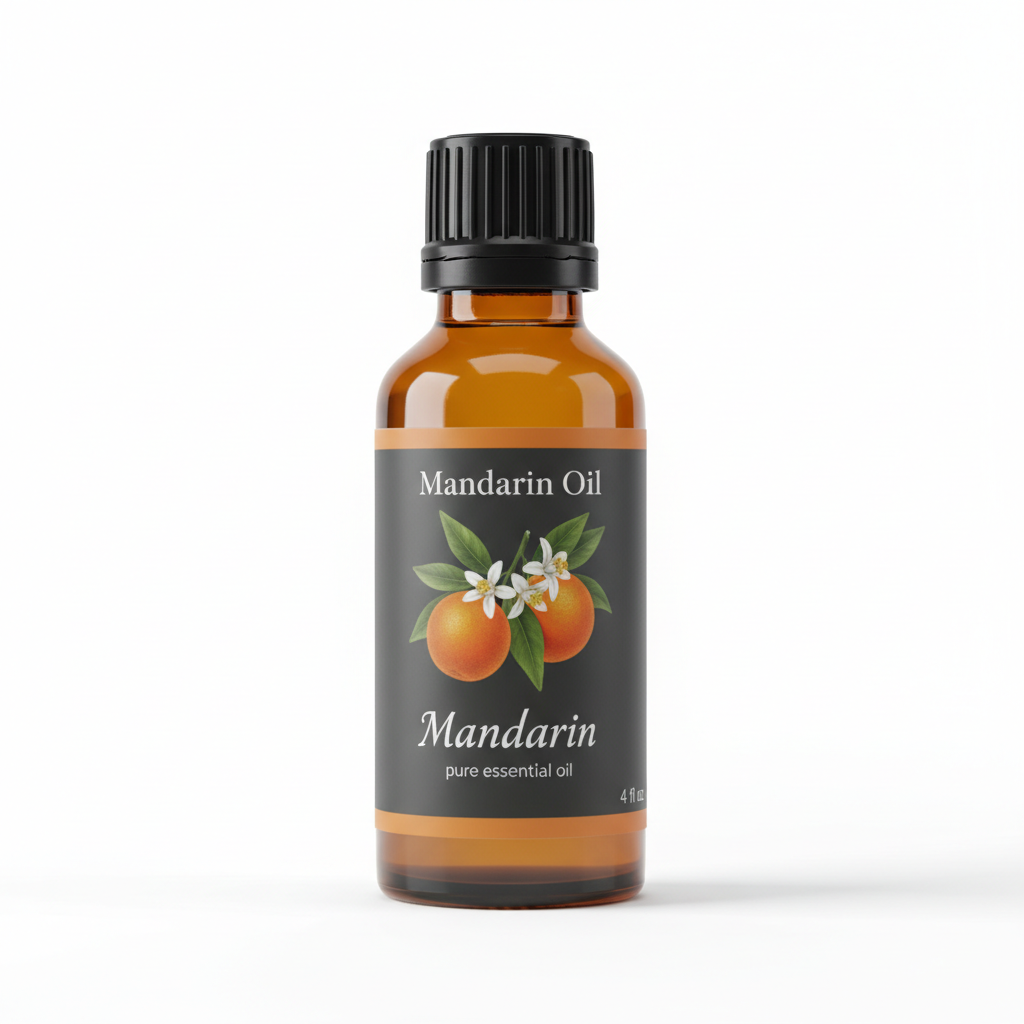
Mandarin Essential Oil
Our own Mandarin Essential Oil, in sizes from 0.5 oz to bulk.
From $10.99
Shop Now →This guide breaks down the real differences between Italian mandarin oil vs Chinese mandarin oil, explains what grade terminology means (and doesn't mean), and gives you a practical framework for comparing bottles before you buy. None of this is about which oil performs better for any particular purpose. It's about sourcing, purity, and getting what you actually paid for.
Why Origin Matters When Buying Mandarin Oil
Mandarin trees grow across several regions, but the essential oil trade is dominated by two supply chains: the small, seasonal groves of coastal Italy (largely Sicily and Calabria) and the much larger, industrial-scale orchards of China's Hubei, Zhejiang, and Sichuan provinces. Both produce genuine Citrus reticulata peel oil. They are not the same product.
Origin shapes three things a buyer can actually notice: aroma character, batch consistency, and price. Italian fruit is typically hand-harvested in smaller volumes, cold-pressed close to the grove, and bottled from single-region, sometimes single-farm lots. Chinese production runs at industrial scale, with fruit pooled from many orchards and pressed in centralized facilities. Neither approach is inherently superior on paper, but they produce oils with distinct personalities, and they carry very different cost structures that show up on the price tag.
A mandarin oil origin comparison isn't about patriotism or romance. It's about matching the sourcing story on the label to what's actually achievable at that scale and that price. A $9 bottle claiming small-batch Sicilian sourcing should raise an eyebrow before it raises a diffuser lid.
Italian Mandarin Oil vs Chinese Mandarin Oil: The Core Differences
| Factor | Italian Mandarin Oil | Chinese Mandarin Oil |
|---|---|---|
| Typical growing regions | Sicily, Calabria | Hubei, Zhejiang, Sichuan |
| Harvest scale | Smaller, often family-run groves | Large commercial orchards |
| Aroma profile | Bright, floral-sweet, complex top notes | Sweeter, rounder, sometimes flatter top notes |
| Batch-to-batch consistency | Can vary by harvest year and lot | Generally more uniform due to pooled sourcing |
| Typical price per 10ml | $14 to $30+ | $6 to $16 |
| Common label terms | "Sicilian," "single-origin," harvest year | "Pure," "100% natural," origin often unlisted |
| Supply chain length | Shorter, fewer intermediaries | Often longer, multiple resellers |
Neither column is automatically the right answer. A candlemaker blending mandarin into a larger fragrance formula may prize the Chinese oil's consistency and value. A perfumer chasing a specific bright, layered top note may pay the premium for a single Sicilian lot. The point of this table isn't to crown a winner. It's to help you recognize which trade-offs you're actually making at checkout.
What "Grade" Actually Means on a Mandarin Oil Label
Here's an uncomfortable fact for anyone comparing bottles: there is no universal, regulated grading system for essential oils. Terms like "aromatic grade," "pure grade," "premium grade," and "food grade" are not defined by any single governing body, and different sellers use them differently. Understanding mandarin oil grade meaning starts with understanding that most of these words are marketing language, not certification.
What does carry real weight is documentation. A batch-specific Certificate of Analysis (COA) from an independent lab, showing gas chromatography-mass spectrometry (GC-MS) results, tells you the actual chemical composition of that lot: the ratio of limonene, gamma-terpinene, and other naturally occurring constituents that make up genuine mandarin peel oil. That's a fact you can check. A word like "premium" printed on a label is not.
| Term You'll See | What It Usually Means | What to Actually Check |
|---|---|---|
| "Aromatic grade" / "premium grade" | Unregulated marketing term | Ask for a batch-specific GC-MS report |
| "100% pure" | Should mean no synthetic additives or carrier dilution | Cross-check ingredient list; look for a single botanical name |
| "Cold-pressed" | Extraction method, not a quality tier | Verify it's plausible for the stated origin and price |
| "Organic" | Should reflect certified farming practices | Look for an actual certification body (USDA, ECOCERT), not just the word |
| "Food grade" | Sometimes a real regulatory category, sometimes not | Confirm against the seller's actual food-safety documentation |
If a seller can't produce a current, lot-matched COA on request, that alone is worth more than any grade adjective printed on the bottle.
Quality Indicators to Look For
Once you set grade language aside, a handful of concrete signals separate a well-sourced mandarin oil from a mediocre one:
- A single botanical name on the label. It should read Citrus reticulata (or Citrus nobilis, an older synonym), not a vague "citrus blend" or "mandarin fragrance."
- A stated country or region of origin. Reputable sellers, whether sourcing from Italy or China, are usually willing to name where the fruit was grown.
- A batch or lot number. This is what a COA is matched against; without it, any lab report on the seller's website is essentially decorative.
- Amber or cobalt glass packaging. Mandarin oil is photosensitive to light exposure, and clear glass or plastic bottles suggest the seller isn't thinking about shelf stability.
- A harvest or bottling date. Citrus oils have a shorter useful shelf life than heavier oils like sandalwood or patchouli, typically one to two years unrefrigerated, and an undated bottle could be old stock.
- Consistent color. Genuine mandarin oil ranges from pale yellow to deep orange depending on ripeness and origin. Colorless or unnaturally saturated orange can indicate dilution or added color.
None of these checks require a lab of your own. They just require reading past the front label to the fine print, and being willing to email a seller and ask.
Key Features to Compare Before You Buy
Extraction Method
Nearly all genuine mandarin peel oil is cold-pressed (expression), not steam-distilled, because the peel's aromatic compounds degrade under heat. If a seller lists steam distillation for mandarin, that's worth a follow-up question. It's not automatically disqualifying, but it's uncommon enough to warrant clarification.
Color and Viscosity
Hold the bottle up to light if you can. A thin, watery consistency with a color that seems too uniform across batches can suggest a carrier oil or synthetic fragrance has been added. Natural variation between lots is normal and, honestly, a decent sign that you're looking at a real agricultural product rather than a manufactured formula.
Lab Documentation
Ask whether a GC-MS report is available for the specific batch you're purchasing, not a generic report from a prior year. Sellers who route this data through a public batch-lookup page or QR code on the bottle are generally more transparent than those who only mention testing in general marketing copy.
Packaging and Storage Cues
Beyond bottle color, check whether the listing mentions storage guidance (cool, dark place) and whether the cap uses an orifice reducer to limit air exposure once opened. These are small details, but they reflect whether a seller actually understands the product they're selling.
Price per Ounce, Not per Bottle
Bottle sizes vary widely (5ml, 10ml, 15ml, 30ml, 4oz), which makes sticker price nearly useless for comparison. Convert everything to a per-ounce or per-milliliter figure before judging whether a price is fair.
Top Picks at Different Price Points
Rather than naming specific brands, which change formulations and sourcing more often than most buyers realize, here's what to expect and look for at each price tier when shopping for the best origin for mandarin essential oil relative to your budget.
Budget Tier: Roughly $6 to $12 per 10ml
At this price, expect Chinese-origin oil, pooled-lot sourcing, and minimal per-batch documentation. This tier can still be a legitimate, honestly-labeled product; it's simply not going to offer single-origin traceability. Look for at least a botanical name, a country of origin, and a general (even if not batch-specific) safety data sheet. Skip anything with no origin listed at all.
Mid-Range: Roughly $13 to $22 per 10ml
This is where most well-run independent sellers sit, whether sourcing from Italy or China. Expect a named region, a batch number, and a COA available on request or posted online. This tier usually offers the best balance of transparency and value for a home diffuser, candle-making, or small-batch skincare use case.
Premium Tier: $23+ per 10ml
Here you're generally paying for single-origin Italian lots, smaller harvest runs, and sellers who publish lot-matched GC-MS data as standard practice rather than on request. This tier makes the most sense for perfumers, formulators building fine fragrance, or buyers who've smelled the aroma difference and have decided it's worth it to them specifically.
A higher price is not proof of higher quality on its own. It should always be accompanied by more documentation, not just a fancier label.
Red Flags to Avoid
- No botanical name anywhere on the label or listing. If you can't find "Citrus reticulata" in writing, move on.
- Vague or missing origin. "Sourced globally" or no mention of a country at all is a sign the seller either doesn't know or doesn't want to say.
- Grade language with no supporting documentation. "Premium" or "top grade" printed in bold with no COA link behind it is decoration, not information.
- Price that seems too low for the claimed origin. Genuine single-origin Sicilian oil at a bargain-bin price is a mismatch worth questioning before buying.
- Clear glass or plastic bottles. A seller who packages a light-sensitive citrus oil this way either doesn't understand the product or is cutting costs somewhere that matters.
- No batch number or bottling date. This makes it impossible to verify freshness or match any lab report the seller might reference.
- Reviews mentioning an off or synthetic smell. Read a handful of recent reviews before buying; a pattern of complaints about scent is more reliable than any label claim.
Where to Buy Mandarin Oil
A few practical channels tend to serve buyers better than others:
- Direct from a specialty essential oil retailer's own site. This gives you the best shot at reaching someone who can answer a sourcing question directly, and at finding batch-specific documentation posted alongside the product.
- Established marketplaces, with care. Large marketplaces carry both excellent and poor sourcing side by side under similar-looking listings. Read the full listing, not just the title and photo, and check whether the seller (not just the platform) has a track record.
- Wholesale or bulk suppliers, for larger volumes. If you're formulating candles, soap, or fragrance at any scale, buying in bulk from a supplier who provides COAs per shipment is usually more cost-effective and more traceable than buying many small retail bottles.
- Avoid unverified marketplace resellers with no brand identity. A listing with a generic name, no company information, and stock photography borrowed from elsewhere is a common pattern for relabeled or blended product.
Whichever channel you choose, the questions stay the same: What's the botanical name? Where was it grown? Is there a batch-matched lab report? A seller who answers all three without hesitation has usually earned the sale.
Putting It All Together
Choosing between Italian mandarin oil vs Chinese mandarin oil isn't about picking a winner. It's about matching sourcing, documentation, and price to what you actually need the oil for, and then verifying that the label matches reality. Grade terminology alone won't tell you that. A batch number, a country of origin, and a lab report will.
Before applying any essential oil to skin, dilute it properly in a suitable carrier and do a patch test first. If you have questions about incorporating a new product into your personal care routine, a qualified healthcare provider is the right person to ask.